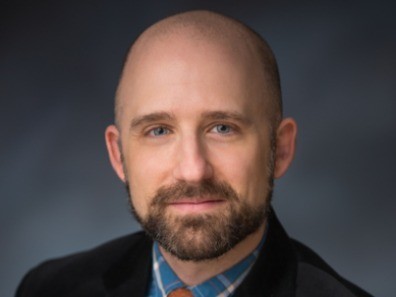
Natan Meir has been appointed the Joseph J. and Dora Abbell Librarian and Professor of Jewish History at the Jewish Theological Seminary in New York.
Meir will depart from his current position as Lorry I. Lokey Professor of Judaic Studies and Academic Director of The Harold Schnitzer Family Program in Judaic Studies at Portland State University at the end of this month. JTS, the Conservative movement’s oldest educational institution in the United States, houses the second-largest collection of Judaica in the world, trailing only Israel’s National Library.
“I’m going to be working to raise the visibility of the library to encourage various constituencies both within the institution and outside the institution to engage more with the library and to use its holdings in various ways,” Meir said.
Meir has taught Judaic Studies at Portland State for 18 years, chairing the program for the last 13. He received a bachelor’s degree in history, along with a master’s degree and a doctorate in Jewish history, from Columbia University. He’s written a pair of books; “Kiev, Jewish Metropolis: A History, 1859-1914” in 2010 and “Stepchildren of the Shtetl: The Destitute, Disabled, and Mad of Jewish Eastern Europe, 1800-1939” in 2020.
“It’s been incredibly enriching and educational for me to spend time at a public university like PSU and I’ve taught amazing students here and have interacted with wonderful colleagues. Moving to the seminary is, the way I see it, an opportunity for me to serve the Jewish people,” Meir said. “At this point in my career, that feels like the right thing. The directorship of the library is an exciting challenge that feels right for me now.”
Meir will also teach classes at JTS, though specific course titles have not been determined as of yet, and is hoping to continue his current line of research into European Jewish folk customs of the 19th and 20th century.
“There’s a particular funeral ritual that was practiced in some Jewish communities in Western Europe that involved the close family members of the deceased holding on to the foot or the toe of their departed loved one and just before the funeral reciting a kind of a forgiveness formula, which basically in which they asked the departed to forgive them for any wrong that they might have done them during their lifetime,” he said, describing an example of his current research. “It was very specific to these Western European Jewish communities, and It is still practiced by some Swiss Jewish families, but other than that, it isn’t practiced anymore.”
Loren Spielman, currently an associate professor of Judaic Studies at PSU, has been designated as the program’s next academic director.
“He’s a great guy. He’s a great teacher. He’s a wonderful scholar. And I have 100 percent confidence that he’s going to be an amazing leader for Judaic Studies as well. I’m excited to see what happens in the program, even though I’m not going to be here anymore,” Meir said of Spielman.
Meir reiterated that, despite his departure after nearly two decades, the program is on solid footing and should continue to be an asset to the institution and Portland’s Jewish community for years to come.
“I’ve kind of been the face of the Judaic Studies program for a long time. So, my worry is that people might think, ‘oh, Natan is leaving, then what’s going to happen to Judaic Studies?’” he said. “Although people hear difficult news about PSU because of the fiscal crisis, there’s also wonderful things happening at the university and in Judaic Studies. We’ve got fantastic students, we’ve got a very robust curriculum, and we’ve got our public events and more possibilities in the works.”
Those public programs have been a mark of distinction for the program; from the annual Gus and Libby Solomon Memorial Lecture to smaller opportunities for connection with Portland’s Jewish – and broader - community.
“We were founded thanks to a lot of dedication and support from the Jewish community, and we’ve always seen it as part of our mission to give back and to keep engaging with the, I would say, with the Jewish community specifically, but also in a broader sense with the larger Portland community,” Meir said. “it’s been kind of in our DNA in a way that is not necessarily true for other academic departments.”
PHOTO: Jewish Review file