The new (Hebrew) year is shaping up to be one of significant change for Rachel’s Well Community Mikvah.
The mikvah (Jewish ritual bath), owned and operated by the Jewish Federation of Greater Portland, is now under the management of Dr. Yosef Rosen, the Federation’s Director of Jewish Life and Learning. In addition, Federation Director of Community Programs and Engagement Jamie Hogland has become the primary point of contact for mikvah scheduling and coordination, taking over for Sarah Evans in that work.
Evans, who had worked with former Federation Chief Planning and Engagement Officer Caron Blau Rothstein to open the mikvah as the first federation-run facility of its kind in the country at the time, was first introduced to mikvah practice shortly after her wedding in observance of Judaism’s traditional family purity laws.
“It’s a very special, very kedusha (sacredness)-filled embodied Jewish ritual that really is the center of family life. It’s a mitzvah that I have always really held close and has been very special,” Evans said. “When there came an opportunity to enable that practice for Jewish women across Portland, I jumped at the chance.”
In addition to its use by observant women, observant men traditionally immerse in the mikvah before holidays. Immersion in the mikvah is also the final step in the process of conversion to Judaism. Additionally, contemporary mikvah practice has grown to encompass immersion in the living waters of the mikvah to mark a variety of milestones and transitions in life. Evans has been there for all of it.
The honor of the last 10 years in this role has been connecting all types of Jews to this practice,” Evans said. “Our mikvah is a mikvah for all Jews in the Portland metro area; In fact, even beyond that, we have users who are visiting from far-flung places. We have users who drive up from Eugene. It’s all stripes. of Jewish men and women who use our mikvah.”
Evans helped build the procedures Rachel’s Well operates by from the ground up – an important consideration given the vulnerability of regular mikvah practice and the modesty and privacy concerns for those engaging in it.
“One of the elements that we put in place to keep people’s privacy is, as I would connect a user to an attendant. The user would always know who the attendant was going to be so that she could reach out to her if she wanted to before,” Evans said. “But I never told the attendant until that afternoon so that the mikvah user wouldn’t have to see her attendant in the community and know that the attendant knew that was her mikvah night.”
Those responsibilities now fall to Hogland.
“I’m excited because I get to learn about something I’ve never known about. and is a newer concept to me,” she said. “What can I do to create a meaningful experience from my end for every person utilizing Rachel’s Well?”
Rosen, meanwhile, takes over the administrative aspects of the mikvah – a role which had been occupied by Blau Rothstein since she was project manager on the mikvah’s construction until her departure from Portland earlier this year. This includes community outreach and education, interfacing with the Oregon Board of Rabbis, recruiting and training mikvah guides and more.
Rosen first engaged with mikvah practices when he was living in Israel – an ancient, natural mikvah was just a short hike outside the community in the south where he resided. Though the waters were quite cold and there were occasionally fish in the mikvah pool, he recalled; he began immersing regularly – sometimes even daily.
“It was beautiful, and it really woke me up to how this could be a sacred thing,” he said.
Both Rosen and Hogland hope to educate and engage with as many community members as possible to let them know that despite stereotypes and misconceptions, mikvah practice is available and accessible to all Jews.
“Mikveh is this weird paradox where it’s simultaneously such an accessible ritual. You just go in the water; you make a blessing. On the other hand, for many Jews, it’s seen as a very inaccessible ritual, because you can’t do it at home, and then you need a guide, and a lot of people have these assumptions about it’s only for these people. The whole point of a communal mikvah is that it’s for anybody, for any purpose,” Rosen said. “It’s not that people need to come to the mikvah, it’s rather making sure that people in Portland know that this is an available, accessible resource for them for whenever they want to have a mikvah experience.”
To schedule an immersion at Rachel’s Well, email [email protected]. For more information about Rachel’s Well, visit jewishportland.org/ourcommunity/rachels-well-portland-mikvah. You can also email Rosen at [email protected] or Hogland at [email protected].
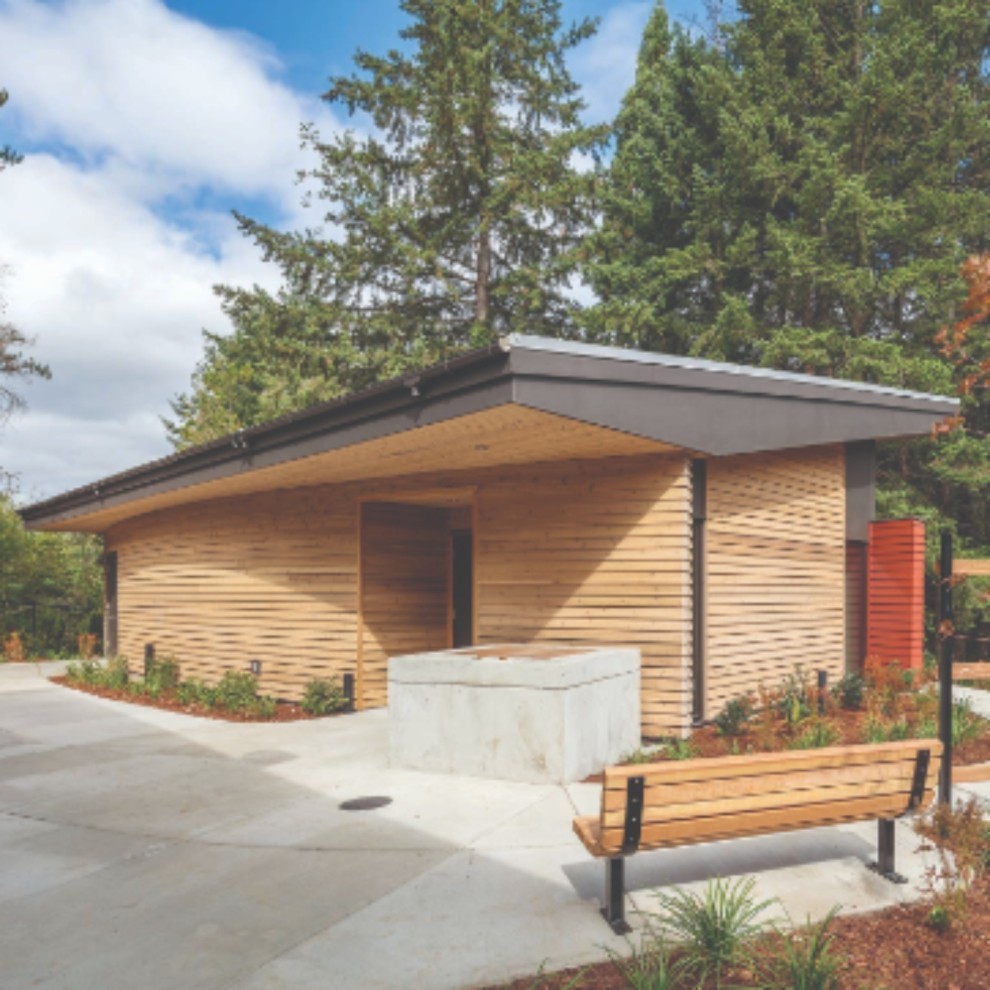
PHOTO: Benjamin Ariff/Jewish Review file